Filter

Hay & Fodder
Showing 4 Results
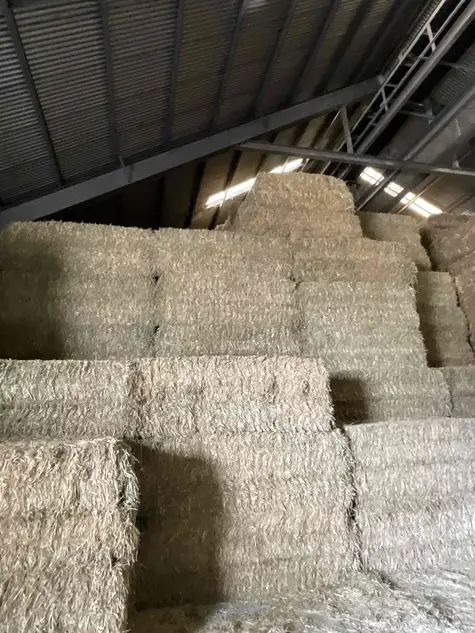


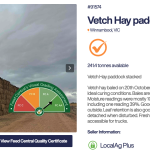
| Protein (CP) | 11.80 |
| Energy (ME) | 9.92 |


| Protein (CP) | 10.10 |
| Energy (ME) | 10.30 |
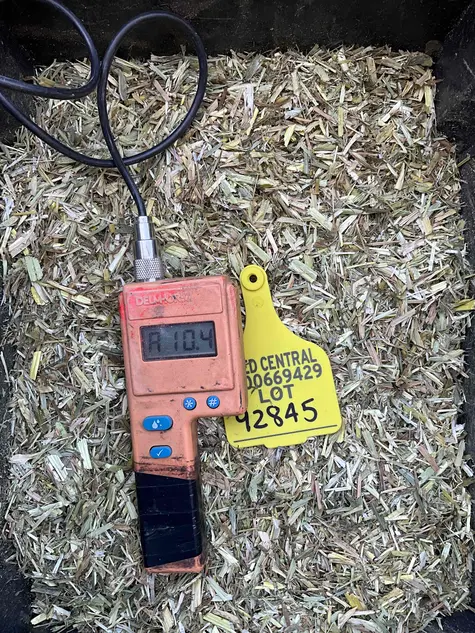
| Protein (CP) | 11.80 |
| Energy (ME) | 10.22 |


| Protein (CP) | 13.20 |
| Energy (ME) | 10.28 |
HAY & FODDER IN HORNSDALE SA
Hay and fodder are essential for maintaining consistent feed supplies during Australia’s dry and cold months. Commonly used on farms, options like hay bales and silage provide reliable nutrition for livestock across various operations. These livestock feed options are particularly useful for complementing pastures or serving as a primary feed source when grazing is limited.
Popular varieties include oaten, lucerne, and mixed grasses, each suited to different livestock and feeding needs. Across our hay categories, you’ll find many varieties of bales of hay for sale, catering to both large operations and smaller quantities. Silage is another practical choice, offering excellent nutrient preservation, particularly in intensive feeding systems. Fodder supplies, including hay and silage, are relied upon to support operations year-round.
Whether you’re preparing for seasonal changes or expanding your feed options, hay and fodder form the base of many livestock feed rations.
Explore More Subcategories
General Questions
How much is a bale of hay in Australia?
Hay prices vary depending on the type, quality, season and location. As a rough guide for the current season:
- Cereal hay (oaten, wheaten, barley): $120 to $280 per tonne ex-farm, or around $10 to $25 per small square bale
- Lucerne: $280 to $500+ per tonne depending on cut, protein, and whether it is irrigated
- Pasture and grass hay: $80 to $200 per tonne
- Rhodes grass and tropical hays: $120 to $250 per tonne in QLD and northern NSW
- Vetch hay: $200 to $380 per tonne depending on protein and region
These are ex-farm prices. Freight adds significantly on top, particularly for remote buyers or interstate loads.
Every listing on LocalAg shows both an ex-farm price and an indicative delivered price, so you can see the true cost before you contact the seller. Browse live hay listings here to see what is available in your region right now.
What types of hay are available to buy in Australia?
Australia produces a wide range of hay types to suit different climates and livestock. Here is a quick rundown of the most common categories.
Cereal hays include oaten hay, wheaten hay, and barley hay. These are the workhorses of Australian livestock feeding. Moderate protein, high fibre, widely available, and generally the most affordable option. Oaten hay is Australia's most popular horse hay.
Legume hays include lucerne, vetch, and clover hay. All are higher in protein than cereal hays. Lucerne is the go-to for dairy, performance horses, and ewes pre-lambing. Vetch is a strong alternative at a lower price point. For a full comparison, see our guide: Protein Hays and How They Compare.
Tropical and subtropical hays include rhodes grass, sorghum hay, and cavalcade. These dominate in QLD and northern NSW and suit beef cattle in warm-season regions.
Specialty hays include teff hay (low NSC, ideal for metabolic horses), canola hay, rye grass hay, and various pasture and grass hay blends.
Browse all types on the this page. If you cannot find the type you need, post a free Wanted Ad and our team will track it down for you.
How do I buy hay safely online in Australia?
Hay scams have increased sharply in recent seasons, particularly on Facebook Marketplace and Gumtree, where sellers are unverified and payments are not protected. Here is how to buy safely.
Use a verified agricultural marketplace. Generic classifieds platforms do not verify sellers, check feed quality, or protect your money. LocalAg is purpose-built for the hay industry. Sellers are verified, listings include real feed test data where available, and every transaction is protected through CheckVault escrow.
Never pay a deposit via PayID or bank transfer to a stranger. The most common scam goes like this: hay listed below market price, a seller creating urgency ("three other buyers are coming today"), and a request for an immediate deposit to hold the load. Once the transfer clears, the profile is gone. Banks cannot recover these funds.
Use escrow payment. On LocalAg, your payment goes into CheckVault, a secure third-party account. The seller knows the funds are there but cannot access them until you confirm the hay has arrived and is what you ordered.
Check for feed test data. Scam listings rarely have real quality documentation. Legitimate sellers on LocalAg can attach NIR feed test results showing protein, energy, fibre, and moisture content. You can also arrange an independent hay test through our Testing service.
Post a Wanted Ad if you are struggling to find stock. Do not go digging through risky classifieds when you are under pressure. Post a free Wanted Ad on LocalAg and our team will find a verified supplier for you.
Read more: Hay Scams are Spiking.
What is the difference between a round bale and a square bale?
Small square bales (also called two-string or conventional bales) weigh around 15 to 25 kg. Easy to hand-carry and stack. Preferred by horse owners, hobby farms, and small mixed operations. They cost more per tonne because of the extra labour involved in producing and handling them.
Large square bales (6-string or 8-string) weigh 400 to 650 kg. You need a tractor or front end loader to move them. Lower cost per tonne, efficient to transport on a truck, and they stack well in a hay shed. The standard format for large cattle and sheep properties, feedlots, and hay merchants.
Round bales weigh 250 to 450 kg depending on species and how tightly they are wound. The round shape sheds rain reasonably well, making them better suited to short-term outdoor storage than large squares. Popular with cattle producers who ring-feed directly in the paddock. Can result in more wastage when fed on the ground without a proper hay feeder.
Every LocalAg listing displays bale type and approximate weight so you can work out how many bales you need before you pick up the phone.
How much does hay delivery cost in Australia?
Freight can add significantly to your ex-farm price. For remote buyers or interstate loads it can sometimes double the cost. Here is a rough guide for the current season:
- Short haul under 200 km: $20 to $50 per tonne
- Medium haul 200 to 600 km: $50 to $100 per tonne
- Long haul 600 km and over: $100 to $180+ per tonne
- Interstate: can exceed $200 per tonne depending on where it is coming from and going to
What drives the rate: distance is the biggest factor. Truck size matters too, as a B-double carrying 40 tonnes is cheaper per tonne than a smaller semi. Bale type plays a role because large square bales pack more efficiently than rounds. Road access to your property matters if it requires a smaller truck, and seasonal demand pushes rates up during dry periods.
Every listing on LocalAg includes an indicative delivered price so you can compare the true cost, not just the ex-farm price. For a full breakdown of whether interstate hay stacks up financially, read: Is Interstate Hay Worth It? Calculating Your Delivered Price.
Can I get hay delivered to my farm?
Yes. Many sellers on LocalAg arrange their own freight, and the LocalAg team also has freight connections to help buyers who need transport organised, including to remote and regional properties.
Once you agree on a purchase, the seller or LocalAg's logistics team arranges the truck. Your payment sits in CheckVault escrow and is only released to the seller after you confirm the hay has arrived and matches what was ordered.
A few things to have ready before delivery: clear property access (let the seller know if your roads have weight or height restrictions), a suitable unloading area (large square bales need a forklift or loader, rounds need a tractor), and your mobile number for the driver to confirm arrival times.
Cannot find hay near you? Post a free Wanted Ad on LocalAg, describe what you need, and our team will find a verified supplier who can get it to you. Or call us directly on 1300 669 433.
How do I check hay quality before buying?
Get the feed test data. A NIR (near-infrared reflectance) feed test is the most objective way to assess hay quality. The key numbers to look for:
- Crude Protein (CP): lucerne should be 18% or above, cereal hays typically sit between 7 and 12%
- Metabolisable Energy (ME): higher ME means more energy available to the animal
- Acid Detergent Fibre (ADF): lower ADF means more digestible hay
- Moisture: should be below 14 to 15% to avoid mould risk
On LocalAg, sellers can display Feed Central feed test results directly on their listing so you can compare the numbers before you commit to buying. If you want to arrange independent testing on a load before purchase, visit our Testing page.
Visual checks. Bright green colour means good curing. A musty or ammonia smell means mould. Strong leaf retention in lucerne and vetch means higher protein. Heavy weed content reduces feed value and can introduce problem plants to your livestock.
Feed Central Visual Gauge. LocalAg uses the Feed Central Visual Gauge to standardise quality descriptions across all listings. It replaces vague terms like "good quality" with a consistent, objective score. Listings with Quality Assured or Weed Safe badges have passed additional verification criteria.
If a seller cannot give you any quality data and the price looks like a bargain, trust your instinct.
What is the best hay for cattle in Australia?
The right answer depends on whether you are feeding beef or dairy cattle and what stage of production they are at.
Beef cattle on maintenance or growing rations: Oaten hay, wheaten hay, and barley hay are the cost-effective backbone of beef cattle feeding. Pasture hay and grass hay work well for maintenance on cattle in good condition. In northern Australia, rhodes grass and sorghum hay carry much of the load.
Beef cattle being flushed, joined, in late pregnancy, or weaners: Step up to lucerne or vetch. Lucerne at 18 to 25% CP is ideal for boosting body condition before joining, supporting late pregnancy, and driving weaner growth. Vetch delivers similar protein at a generally lower price. See the full comparison: Protein Hays and How They Compare.
Dairy cattle: Lucerne is the standard. High protein supports milk production and body condition. Cereal hays are commonly used alongside lucerne as a fibre source in total mixed rations.
The simple rule: maintenance only means cereal or pasture hay is fine. High production or critical life stages means adding lucerne or vetch for the protein. Also worth reading: Which Hay is Best for Cows.
What is the best hay for horses in Australia?
Oaten hay is Australia's most popular horse hay. Palatable, moderate in protein, high in fibre, and suits most horses well. Look for equine quality or awnless varieties, which are selected to avoid irritation to the mouth and digestive system.
Wheaten hay is similar to oaten and often used interchangeably. Slightly lower in energy. Again, awnless is the better choice for horses.
Lucerne is high in protein and calcium. It suits growing horses, pregnant and lactating mares, and performance horses in hard work. For horses in light work or those that put on weight easily, feed lucerne in moderation or mix it with oaten hay.
Teff hay is the go-to for horses with laminitis, insulin resistance (EMS), or other metabolic conditions. Its very low NSC content makes it safe for horses that need restricted sugar and starch in their diet.
Rye grass hay, rhodes grass, and pasture hay can all be fed to horses and are often cheaper, but quality is more variable than purpose-grown equine hays.
What to avoid: any mouldy hay (even small amounts can trigger colic or respiratory problems), hay with toxic weeds, and awned barley hay which can irritate the mouth and gut.
What hay is best for sheep?
Match the hay to the production stage.
Dry ewes and wethers on maintenance: Oaten hay, wheaten hay, or barley hay, along with pasture hay or grass hay. Adequate fibre and energy for sheep in good condition, and cost-effective.
Ewes pre-lambing and lactating: Switch to lucerne or vetch hay. Feed from the last 4 to 6 weeks before lambing. The protein boost, 18% CP and above, supports lamb birth weight, milk production, and ewe body condition. Read the full comparison: Protein Hays and How They Compare.
Weaner lambs: Lucerne or vetch for protein-driven growth, with cereal hay for fibre. A mix works well.
Finishing lambs: Higher energy rations. Cereal hay alongside grain is the common approach for paddock or feedlot finishing.
One note on clover hay: subterranean clover contains phytoestrogens that can affect reproductive performance in ewes when fed in large quantities over a long period. Keep clover hay to a moderate inclusion rate and avoid it entirely during joining.
What does hay moisture content mean and why does it matter?
Moisture content is the percentage of water left in the bale at the time of testing. It is one of the most important quality metrics when buying hay and one of the most commonly overlooked.
Why it matters: Mould and heating. Hay baled above 15 to 18% moisture is at real risk of mould and internal heating. In serious cases the chemical reaction inside a hot bale generates enough heat to start a fire. Hay shed fires from hot bales happen every season in Australia.
Feed value. When you buy hay by weight, high moisture means you are paying for water, not feed. A tonne at 20% moisture contains less dry matter than a tonne at 10%.
Palatability. Mouldy or musty hay is less palatable and livestock will sort around it, which means more waste.
Safe moisture levels: below 14% is safe for long-term shed storage. Between 14 and 18% needs monitoring. Above 18% is high risk and should not go into a shed.
How to check: ask for a Feed Central NIR feed test result, as moisture is always included. You can also arrange a hay test through LocalAg's Testing service. A handheld moisture probe gives a quick field reading. Avoid any bale that smells musty, feels warm inside, or has visible mould on it.
For guidance on storage once you have your hay, read: Preparing for Drought: Feed Storage and Water Planning Tips.
What is silage and how is it different from hay?
Both are conserved forage products but they are made very differently and have different storage, handling, and feeding requirements.
Hay is preserved by drying. Moisture is removed to below 15% so the feed is stable at room temperature. Well-stored hay holds quality for 12 to 24 months. It is easy to transport and feed out in any quantity.
Silage is preserved by fermentation. The crop is sealed at high moisture, around 40 to 60%, and wrapped to cut off oxygen. Lactic acid bacteria lower the pH and preserve the feed without drying it out. Once the wrap is broken, silage starts oxidising and spoiling quickly, so it needs to be fed out within a few days of opening.
Silage is typically higher in digestibility and energy per unit of dry matter than hay made from the same crop. But it requires heavier equipment to handle and is not practical for small operations or long-distance transport.
Neither is universally better. Silage works well for dairy and feedlot operations handling large volumes with the right machinery. Hay suits a wider range of buyers including horse owners, smaller producers, and anyone transporting feed over distance.
How do I store hay once I buy it?
Good storage protects your investment. Poorly stored hay can lose 20 to 40% of its nutritional value within 6 to 12 months. In bad cases it can heat, mould, or catch fire.
In a hay shed: A roofed, ventilated shed is the best option. Stack bales on raised pallets or rails to keep them off the ground and allow air to circulate underneath. Leave small gaps between rows. Keep hay well away from chemicals, fertiliser, or fuel.
Outside storage for short periods: Round bales handle outdoor conditions better than square bales because the shape sheds rain. Stack rounds with the cut side down, or cover with a breathable hay tarp. Do not use plastic sheeting as it traps moisture underneath. Avoid low spots where water sits. Large square bales stored outside without cover will lose 30 to 50% of the outer layer within 12 months.
How long does good hay last? Well-stored hay baled at the right moisture holds quality for at least one full season, often 12 to 24 months.
Warning signs to watch for: Bales that feel warm inside are actively heating and should be moved away from the stack immediately. White or grey surface mould is common and does not always penetrate deeply, but check inside. An ammonia smell means the bale has already overheated and fermented.
How do I avoid hay scams when buying online?
Hay scams have increased sharply in recent seasons. The playbook is consistent: high-quality photos stolen from real farms, hay listed well below market price, a seller creating urgency ("three other buyers are on their way, send a deposit via PayID now to hold the load"), and then the profile vanishes the moment your transfer goes through. Banks cannot recover these funds.
Red flags to watch for:
- Price is well below current market rates. Cheap hay in a dry season is almost always bait.
- The seller is "working away" and cannot meet in person.
- Pressure to act fast, the truck is leaving tomorrow, deposit needed right now.
- No feed test data, or a blurry photo of a result from years ago.
- Payment only accepted via PayID, Osko, or direct bank transfer.
How LocalAg protects you: All sellers on LocalAg are verified members of the Australian agricultural community. Payments go through CheckVault escrow, so your money is held securely until you confirm the hay has arrived and matches what was ordered. If there is a problem with the load, there is a formal dispute process. If you want independent quality confirmation before funds are released, you can arrange a hay test through our Testing service.
Read the full breakdown: Hay Scams are Spiking.
What is a Feed Central quality assurance score?
LocalAg is backed by Feed Central, Australia's leading independent hay and fodder quality assurance organisation with over 22 years of industry experience. The Feed Central quality system is one of the main things that sets LocalAg apart from generic classifieds platforms.
NIR Feed Test results. Near-infrared reflectance testing measures the actual nutritional composition of the hay: Crude Protein (CP), Metabolisable Energy (ME), Acid Detergent Fibre (ADF), Neutral Detergent Fibre (NDF), and Moisture. These figures appear directly on the listing so you can compare hays by nutritional value, not just by species and price. Visit our Testing page to find out how to get your hay tested before or after purchase.
Feed Central Visual Gauge. A standardised quality score based on physical assessment of colour, leaf retention, smell, and weed content. It replaces vague descriptions like "good condition" with a consistent measure that every buyer reads the same way.
Quality Assured badge. Awarded to listings that meet Feed Central's documentation and quality standards.
Weed Safe badge. Awarded to hay assessed as free of significant weed content.
Without this data, buying hay is guesswork. A tonne of lucerne at 16% CP is a completely different feed from a tonne at 24% CP and you cannot tell the difference by looking at it. The Feed Central system gives you the numbers to make a proper decision.
For more on how LocalAg uses quality data to make hay trading work properly: Trading Hay is Complex. LocalAg Makes It Simple.
Can I post a Wanted Ad if I cannot find the hay I need?
Yes, and it is one of the best moves you can make when supply is tight. Instead of scrolling through risky classifieds or chasing unknown brokers, a Wanted Ad on LocalAg puts your requirements in front of our entire verified seller network.
Post your requirements for free: hay type, quantity, bale format, location, and any delivery needs. The LocalAg team and verified sellers can see your ad and respond directly. All enquiries and transactions stay on the platform with CheckVault payment protection.
Good times to use a Wanted Ad: the type you need is not currently listed in your region, you need a large volume and want quotes from multiple suppliers, you are in a remote area and need someone who can arrange freight, you have a specific quality requirement like lucerne above 20% CP or awnless oaten hay, or it is a dry season and you simply cannot find stock anywhere.
Related Blogs
Why You Should Not Make Hay Marketing Decisions on Social Media Chatter
How to Make Your Hay Listing Stand Out and Attract Better Buyers

Your Hay Could Be in the Running for the 2026 National Hay Quality Awards