
There’s plenty of hay on the market right now. But when supply is high, the “noise” is also high. If you’re just scrolling through listings looking for the lowest price, you’re likely leaving money on the table or worse, bringing poor-quality feed into your paddock.
To get the best return on investment, you need a systematic approach to buying. Here is the five-step protocol for searching smarter.
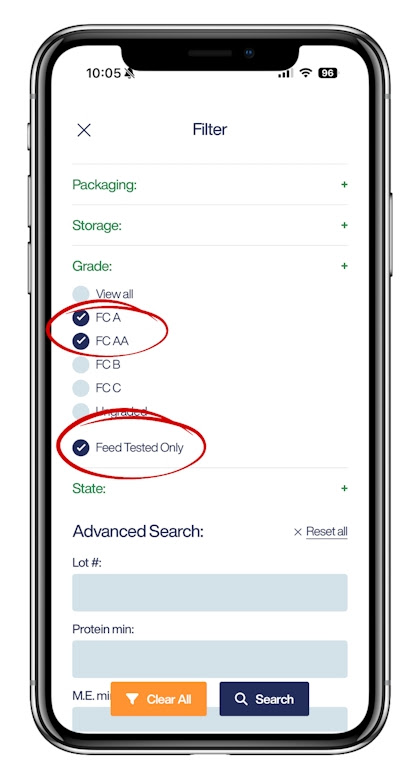
Feed tests aren’t a luxury; they are your primary risk-management tool. An inspection takes the guesswork out of the transaction. When you buy tested hay, you know exactly what’s hitting the feeder, leading to predictable livestock performance and zero “paddock surprises.”
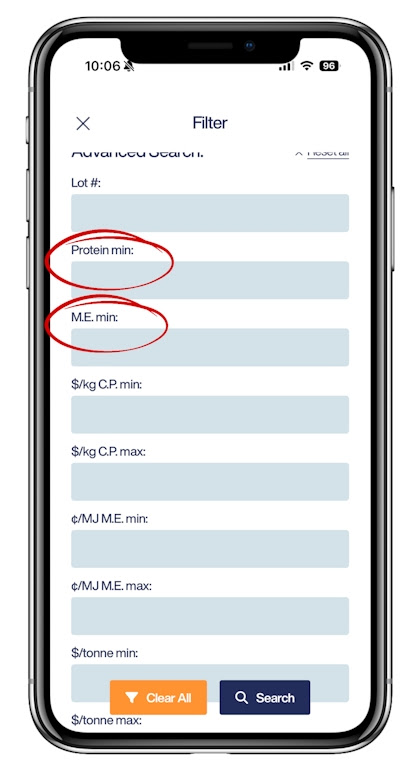
Protein and Metabolizable Energy (ME) specs aren’t there for decoration. If you know the nutritional requirements of your stock, use the filters to strip away the irrelevant listings. Searching without filters is just browsing; searching with them is procurement.
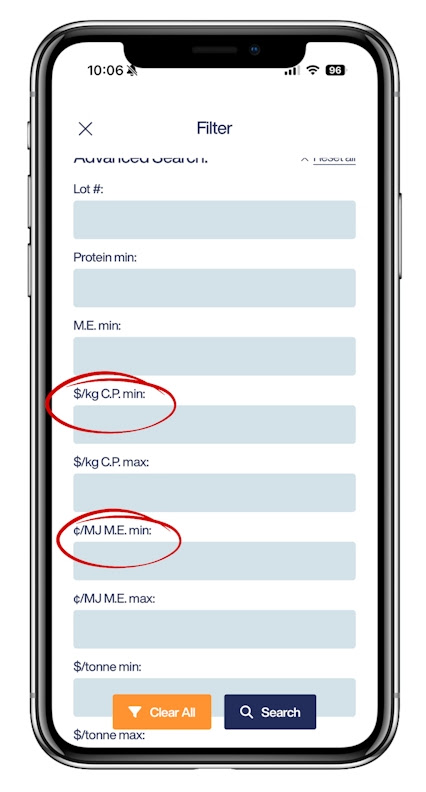
Price per tonne tells you what you’re paying the seller, but it doesn’t tell you what you’re feeding the animal. To compare different lots accurately, you have to look at the cost of the nutrients:
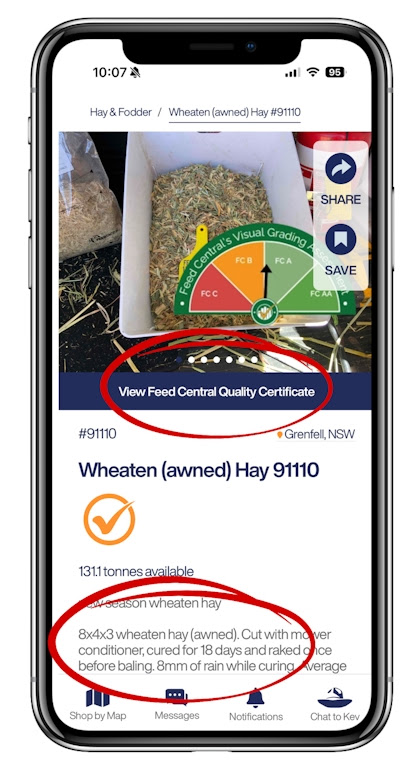
Don’t make a buying decision based on a thumbnail. Click into the details to review photos, harvest specs, and grower notes. You can’t judge the quality of a stack by skimming tiles, the value is in the fine print.
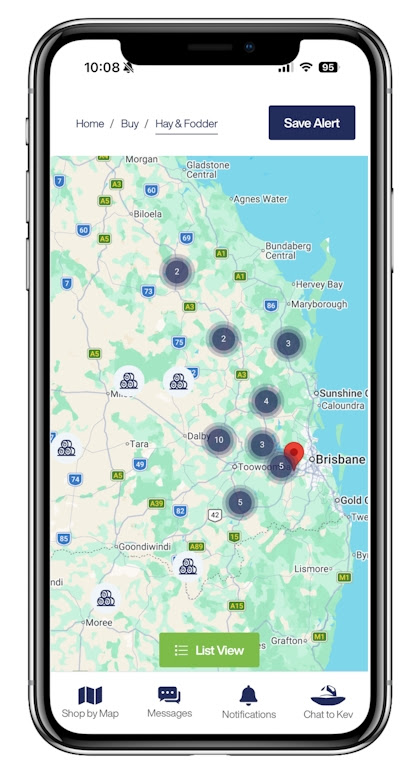
In the current market, freight can quickly negate any savings made on the purchase price. Use the map view to identify quality hay within your immediate radius. Reducing the kilometres between the stack and your gate is one of the easiest ways to lower your total landed cost.
With current supply levels, you have the advantage, but only if you’re disciplined. Get clear on your requirements, use the data available, and lock in your feed requirements now while the quality is accessible.
Search our marketplace