
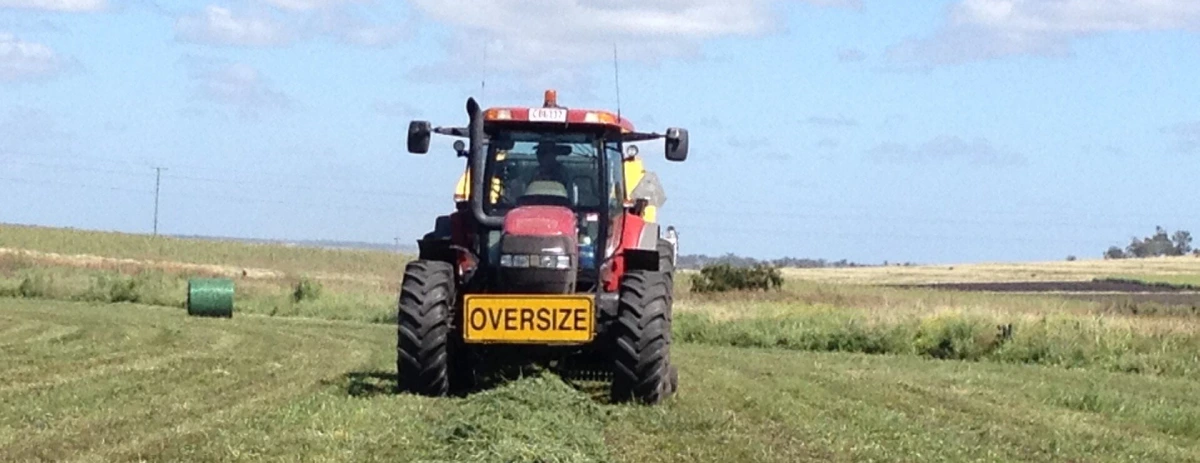
Ask a dozen farmers which tractor is best and you will get a dozen answers, usually with a fair bit of colour attached. The truth is there is no single best tractor, only the right one for the size of your place and the work you do. A bloke keeping ten acres tidy and a cropping operation turning over thousands of hectares are shopping in completely different worlds, even if they both walk into the same dealership.
So rather than crown a winner, this guide runs through the brands and models Australians actually buy, grouped by the horsepower segments the market is built around. Find your segment, and the shortlist gets short in a hurry.
The Australian tractor market runs to roughly ten thousand new machines a year. Sales came in around å9,500 units in 2025 according to the Tractor and Machinery Association, down about seven per cent on the year before, with the mid-size 40 to 100 horsepower range holding up the steadiest while the big high-horsepower gear took the biggest hit. That mid-size strength tells you something: it is the segment most Australian farms actually live in.
Two names sit at the top of the market, and they got there in different ways. Kubota built its position on the smaller end, and it leads the compact and utility segments by a mile, which happen to be the segments that move the most units. John Deere is the global heavyweight and the one most people picture when they hear the word tractor, and it dominates the high-horsepower broadacre end where precision technology matters most. Around those two you have Case IH, New Holland, Massey Ferguson, Fendt, Deutz-Fahr and the value brands like Mahindra and Kioti, each with its own patch.
Here is how it breaks down by segment.
This is the lifestyle block, the hobby farm, the few acres that need mowing, a bit of loader work, and the odd bigger job. It is also the fastest-moving corner of the market by sheer numbers, and it is Kubota country.
Kubota’s B and L series are everywhere on Australian acreage for good reason. They are reliable, easy to run, hold together in our sun, and there is a dealer in most towns. The B series covers the smaller end for mowing and light loader work, and the L series steps up for a property that asks a bit more of it. John Deere goes head to head here with its 1, 2 and 3 series compacts, which are excellent machines with the green resale badge and the tidy composite bodywork that shrugs off knocks. Beyond those two, Kioti, Iseki, Branson and Mahindra all offer genuine value in this bracket, often for less money, though you trade some dealer coverage for the saving.
If you are buying in this class, be honest about the heaviest job you will ask of it. People routinely buy too small, then wish they had the extra grunt for the loader. A little more horsepower and a solid front-end loader is rarely a decision anyone regrets.
This is the heartland. If you run cattle, cut hay, or work a mixed farm, this is almost certainly your bracket, and it is the segment that stays strongest through the ups and downs for exactly that reason. A good mid-size tractor is the one that does ninety per cent of the jobs on a working farm.
John Deere’s 5 series and the hugely popular 6M series are the workhorses here, and the 6M in particular turns up on mixed farms right across the country because it does a wide enough spread of jobs to save you owning two machines. Kubota answers with its M and MX series, tough, no-nonsense ag tractors that have earned a big following, and you will see the likes of the MX range on plenty of Australian properties. New Holland’s T range, Massey Ferguson’s mid-size line, Case IH’s Farmall and Maxxum, and Deutz-Fahr all compete hard in this space, and any of them will serve you well.
At this size the decision often comes down to two practical things: the dealer, and the loader. Get a tractor with a well-matched front-end loader, because on a working farm the loader does more hours than almost anything else. And buy the brand whose dealer will actually answer the phone in your district, which brings us to the point that matters more than the badge.
Once you are into serious cropping, contracting or big-country work, the game changes. This is where horsepower, precision technology and the ability to run all day come first, and where the money gets real.
John Deere’s 6R, 7R and 8R series are the benchmark many measure against, with autosteer and the Operations Center software now standard kit rather than an extra. Case IH’s Puma, Magnum and the articulated Steiger cover the mid and top end, and Fendt sits at the premium point with its Vario transmission and a loyal following among operators who spend serious hours in the seat. New Holland’s T7 and T8, Massey Ferguson’s larger line and Claas round out a competitive field. At the very top, the 200 horsepower plus articulated machines are their own world, built for the biggest broadacre operations.
The technology is the real story up here now. Guidance, variable-rate application, telematics and the early moves toward autonomy are reshaping what these machines do, which is worth thinking about if you are buying something you will keep for a decade. Our take onautonomous tractors in Australia digs into where that is actually up to.
Since it comes up more than any other, it is worth answering plainly. Both are excellent, and you will get good service, proven reliability and strong dealer support from either. The honest differences are these. Kubota generally comes in a touch cheaper for a comparable machine and owns the small and mid-size end, so for acreage and utility work it is very hard to beat. John Deere has the edge in high-horsepower gear and precision technology, the biggest dealer network, and a reputation for holding resale value that many buyers pay a premium for.
For most people the tie-breaker is not the brand at all. It is which dealer is closest and most reliable, because a tractor you cannot get parts or service for quickly is an expensive paperweight during hay season.
Strip away the brand loyalty and the decision comes down to a handful of things.
Match the horsepower to the job, and lean slightly bigger rather than smaller, because you can throttle back a big tractor but you cannot conjure grunt you did not buy. Weigh up the dealer and parts support in your area, which in rural Australia matters as much as the machine. Get a properly matched loader if there is any chance you will need one. And think hard about new versus used, because a well-kept used tractor is often the smarter money, especially for lower-hour hobby and mixed-farm use.
If you go used, check it properly. Hours are the headline number but not the whole story, and a machine that has been serviced and shedded beats a low-hour one that has been flogged and left out. Ourused tractor checklist walks through what to look at, and our guide totractor hours explains how many is too many for the money.
You can browsetractors for sale across every segment on LocalAg, from compact utility machines for the acreage to broadacre gear for the cropping program, with plenty of the brands above turning up in the used market. Every sale is protected through CheckVault escrow, so your money is held securely until the tractor is in your yard and matches what was described. And if you are kitting out, thebalers andmowers and slashers to hang off it are all on the site too.
Work out your segment, buy the horsepower the job needs, and put dealer support ahead of the badge on the bonnet. Do that and it is genuinely hard to go wrong, because the machines at the top of the Australian market are all good ones.
Search our marketplace