
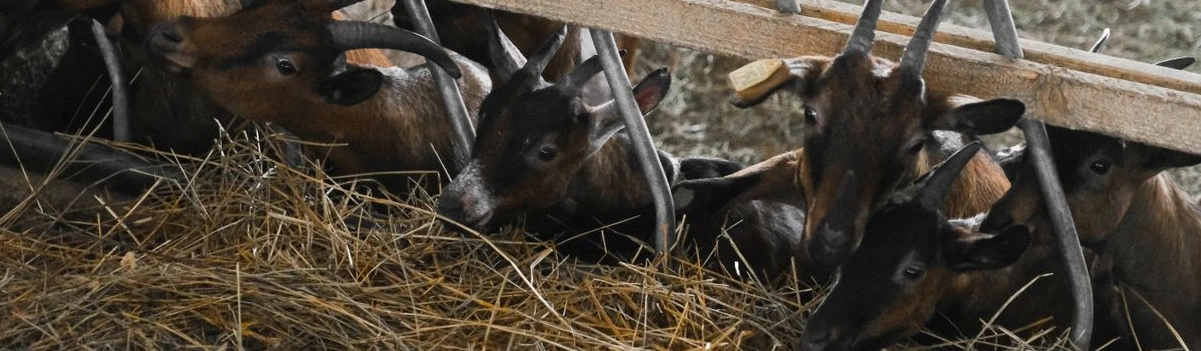
Goats are browsers by nature. Left to their own devices they would rather work through shrubs, leaves and a bit of everything than stand at a single feeder, and that fussiness carries over to hay. They are selective eaters who will happily waste what they do not like, so with goats, quality and palatability matter even more than usual. This guide runs through the main hays available in Australia, which goats each one suits, and how to feed to cut waste and keep your herd healthy.
Good goat hay is leafy, green, sweet-smelling and, above all, clean. Goats are sensitive to mould and spoilage, and mouldy hay or silage is linked to listeriosis, a serious illness, so never feed anything musty or damp. Give hay a good look and a sniff, check it is clean through the middle, and reject anything dusty, mouldy or full of weeds.
One practical point with goats: they waste a lot of hay by pulling it out and trampling it. Feeding in a rack or feeder off the ground keeps it cleaner, cuts waste, and reduces the worm burden that comes from eating off the ground. It is a small change that saves a surprising amount of hay.
As with any stock, the right hay depends on the job the goat is doing. Dry does and wethers ticking over on maintenance need good roughage and not much more. Does in late pregnancy and lactation, growing kids, and dairy goats in milk all need a real lift in protein and energy to do their job. So the question is not just “what is the best hay for goats,” it is “what is the best hay for these goats, right now.”
A note on male goats: wethers and bucks are prone to urinary calculi, sometimes called water belly, which is tied to mineral balance and heavy grain feeding. It is not a reason to avoid any particular hay, but with males it pays to keep the overall diet balanced, go easy on grain, and make sure they always have plenty of clean water. If you are feeding a lot of lucerne and grain to males, have a word with your vet about getting the mineral balance right.
Oaten hay is a palatable, reliable base for goats, offering good roughage and energy that most goats eat readily. It makes an excellent everyday hay for maintenance and a solid foundation to build a ration around. Browseoaten hay listings.
Lucerne is the protein and calcium powerhouse for goats, and it comes into its own for the classes that need it: growing kids, does in late pregnancy and lactation, and dairy goats in milk. For those goats it is hard to beat. For dry maintenance does and wethers it is richer than they need, so it is best fed to the mobs with real demand rather than across the whole herd, keeping the male-goat note above in mind. Browselucerne hay listings.
Both of these legume hays are good, palatable protein sources for goats and a useful way to lift the protein in a ration without relying solely on lucerne.Vetch hay is often more affordable, andclover hay is well liked by goats. Both suit does and growing stock that need building up.
The cereal hays offer good energy and work well for putting condition on goats. The main thing to check is the awns, since heavily awned hay can irritate mouths and eyes. Favour awnless or well-madebarley hay cut before the heads harden.
For maintenance feeding, good grass hays give goats the fibre their rumen needs to stay healthy.Rhodes grass hay and generalpasture and grass hay both work well as an everyday roughage base. Because goats like variety, mixing a grass hay with a legume hay often suits them better than a single type alone.
When feed is short and dear, it is tempting to buy on price and volume alone. In a dry year, though, quality matters more, not less. A weathered, low-energy bale can look like a bargain, but if it does not carry the energy and protein your goats need, they lose condition and you end up feeding more of it and topping up with supplement to fill the gap. That is often a false economy. A smaller amount of good, tested hay does more for the herd, and per unit of actual feed value it can work out cheaper than a shed full of poor hay. This is exactly when afeed test earns its keep. When you are paying premium prices, it pays to know what you are buying.
Run the same checks every time. Look for green colour and plenty of leaf. Smell for a fresh, sweet scent and reject anything musty, since goats are especially sensitive to mould. Shake a flake to check for dust. Watch for awns, seeds and weeds. And ask the seller how and when the hay was cut and stored, since clean, well-stored hay keeps its quality and is far safer for goats. For does in late pregnancy or milk, a feed test takes the guesswork out of whether the hay will meet their needs.
You can browse quality hay from verified sellers across the country in ourhay and fodder listings, with everything from oaten and lucerne to grass and legume hays in one place. Every sale is protected through CheckVault escrow, so your payment is held securely until the hay arrives and matches what was described. To compare the hays in more detail, our guides to thedifferent types of hay in Australia andprotein hays compared are a good next read.
Feed clean hay, match it to the goat, give them a bit of variety, and your herd will thrive.
Search our marketplace