
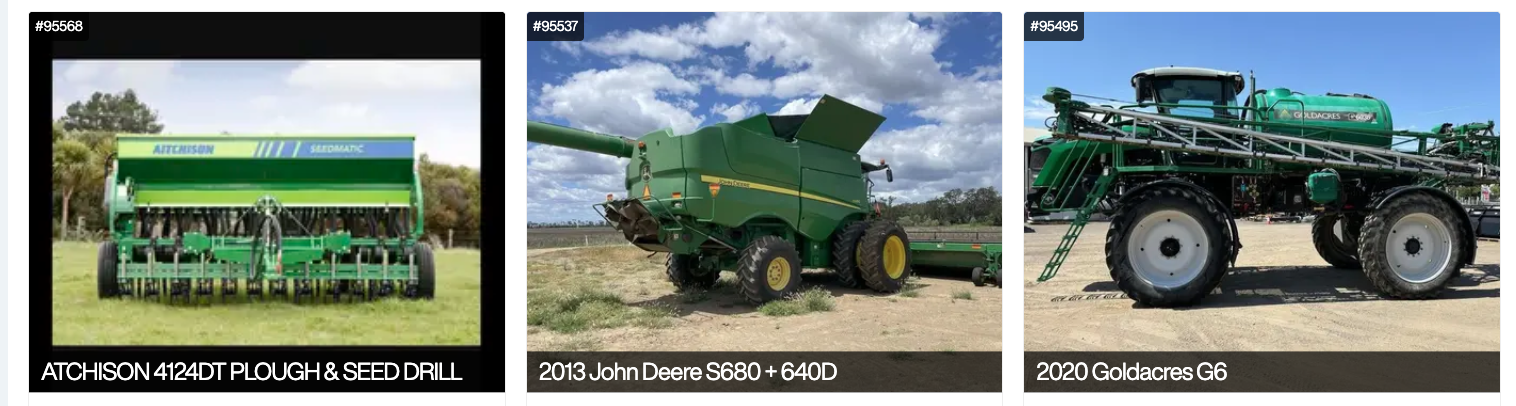
Every farm has it. The tractor that got replaced two seasons ago, the old baler down the back, the implement bought for one job and never touched since. It is easy to walk past idle machinery and not think twice. But every one of those machines is money sitting still, quietly losing value while it waits.
With much of southern Australia working through a dry run and cash sitting tighter than usual, gear you are not using is worth a fresh look. Turning a machine you have finished with into cash in the bank is one of the simplest moves a farm can make right now, and it is easier and safer than most people expect.
A few honest reasons the machine in the shed is better off sold than sitting:
The good news is that the practical side of selling has come a long way. Here are the questions most farmers ask, answered.
The fastest way to get a realistic figure is to look at what similar machines are currently listed and selling for. Search the same make, model, year, and condition across the marketplaces and you will quickly see the range buyers expect.
A few things move the number:
As a rule, price it at the sweet spot: high enough that you are not giving it away, realistic enough that it does not sit for months. Starting slightly above your target and staying open to negotiation usually works better than overpricing and hearing crickets.
The “I might need it one day” machine is the one that costs you the most. If you have not used it in a season or two, the honest question is whether you will, or whether it is just taking up space and value. Even older or worn gear is often worth more sold than scrapped, because somewhere there is a farmer who needs that exact part, model, or workhorse and will pay for it. Letting it go puts cash back in your hands and the machine back to work.
Trading in at the dealer is convenient. You hand it over, it comes off the price of the new machine, and you are done. The trade off is that the trade-in figure is almost always well below what the machine is worth, because the dealer has to clean it, store it, and resell it at a margin.
Selling direct to another farmer typically puts more money in your pocket. You set the price, you deal with the buyer, and you capture closer to the machine’s real market value. The catch has always been the effort and the risk: finding a genuine buyer and making sure you actually get paid. That is exactly what a marketplace built for farmers is designed to solve.
Your main options are dealer trade-in, the large classifieds portals, online auctions and clearing sales, and a farmer-to-farmer marketplace. They each suit different situations, and we compare them in detail in our guide to thebest Australian marketplaces for used farm machinery.
If you want to deal direct, keep more of the value, and have your payment protected,LocalAg is built for that. It is an Australian ag marketplace and app, backed byFeed Central, with a verified, agriculture-only audience. You are dealing with real farmers and agribusinesses, not tyre-kickers, and you can list the machine from your phone while you are still standing next to it.
Getting paid is the worry that stops most people, and it should be taken seriously on high-value gear. The protection on LocalAg is CheckVault escrow: the buyer’s payment is held securely until you both confirm the machine has been picked up and matches the description. That means no chasing EFTs, no bounced payments, and no dodgy screenshots. Both sides trade with confidence, which matters most when there are tens of thousands of dollars on the line.
It helps that everyone on the platform is a verified member of the ag community, so you are far less exposed to the scams and time-wasters that come with open classifieds.
Presentation pays. A machine that is washed down, with grease and built-up dirt cleaned off, simply looks more cared for and sells for more. Beyond a clean:
You do not have to make it perfect. You do have to be honest about its condition, which leads to the next point.
Yes. Non-runners, machines needing work, and gear being sold for parts all have buyers, especially other farmers who can do their own repairs or need spares for a machine they already own. The key is to describe it accurately. Be upfront about what works, what does not, and why you are selling it. Honesty protects your reputation and brings the right buyer rather than a dispute later.
Have the basics ready so the deal moves smoothly:
If you are selling interstate, check each state’s biosecurity and quarantine cleaning requirements. Heavy soil or crop residue may need professional cleaning, and it pays to confirm who covers cleaning, freight, and any permits before you finalise the deal.
Demand follows the season. Tillage and seeding gear moves ahead of cropping, and hay and forage equipment moves ahead of spring, so listing into the lead-up to the season tends to bring the strongest interest. Buyer cash matters too: machines sell better when farmers have money in hand and confidence to spend. If your machine suits a particular job, aim to have it listed and ready before that job comes around.
There is also the end of financial year to think about, both for your own position and for buyers looking to invest before 30 June. How that affects you depends on your circumstances, so it is worth a quick word with your accountant.
On LocalAg, listing is free, and a small transaction fee only applies once a deal actually goes through. That means you can test demand on a machine without committing money up front. How quickly it sells comes down to price, presentation, and demand, and a well-priced machine with good photos and an honest description will always move faster. If the buyers are not finding you, the reverse also works: other farmers can post a free Wanted Ad, so the right machine and the right buyer get matched up.
That machine sitting in the shed is not doing you any favours where it is. Selling machinery it is simpler than it used to be, and with the right platform it is safe, direct, and worth more than a trade-in.
WithLocalAg you can:
Have a look at what similar machines are going for, thencreate a listing and turn the gear you have finished with into cash you can use.