
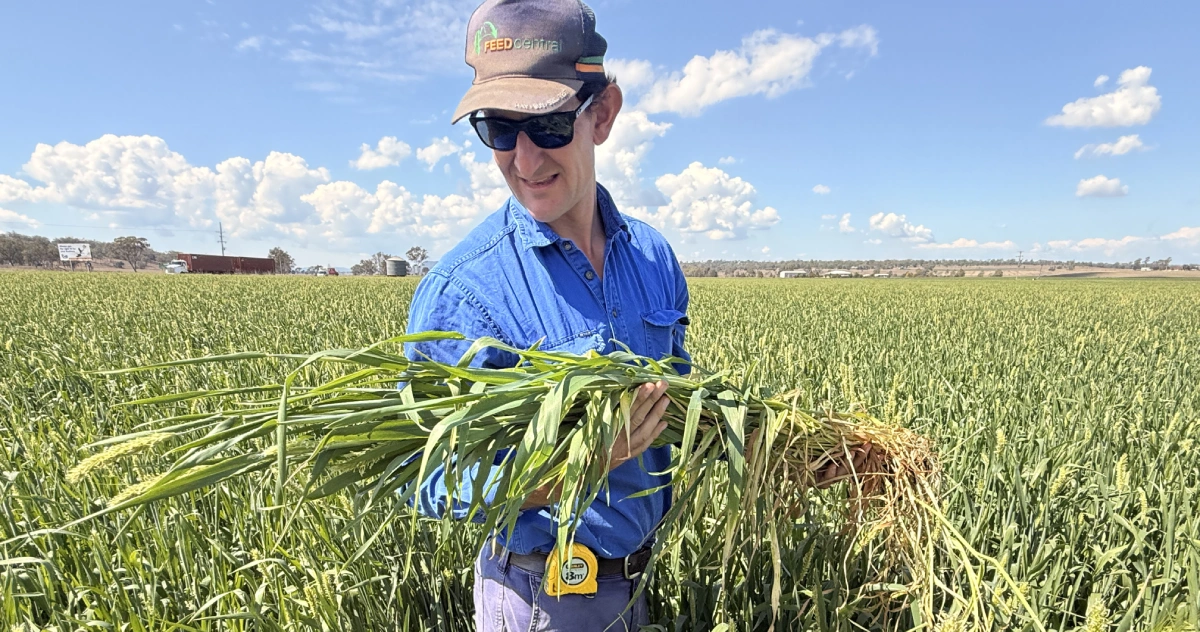
If you’re growing hay in northern Victoria, southern NSW or South Australia, you’re probably looking at one of the best crops you’ve seen in years. You might also be looking at sheds that still hold last season’s hay, and wondering whether it’s worth making more.
Feed Central’s advice is clear: make the hay. Here’s why, and how to make the most of it.
Across the southern hay belt, crops are looking fantastic where they’ve escaped waterlogging. Some growers are building new sheds to store what’s coming, because experience tells them that all hay always sells.
We know it’s been a slower selling season for many Victorian growers, with good-quality hay still sitting in sheds. But the market can change very quickly.
Just on a year ago, hay stocks in the LocalAg and Feed Central system were down to about 20,000 tonnes, and hay was being brought in from Western Australia by road and rail. Within 12 months, a big harvest rebuilt stocks to near historic highs.
That’s how fast the market swings. Now the Bureau of Meteorology says El Niño is firmly established and likely to last into autumn 2027. Southern Queensland is already dry. Feed Central’s market team expects very large demand for hay across the East Coast next autumn, and significant price rises into winter 2027.
As Tim Ford said in the latest market report, it won’t be long until hay stocks are back at record low levels if the El Niño plays out as predicted. Read the full Hay Market Outlook.
In a big crop year, quality is what separates hay that sells quickly at a good price from hay that sits in the shed. This spring has its own challenges, with waterlogged paddocks, lodged crops and foggy mornings. A few lessons from Victorian grower Josh Lanyon on the Hay Matters podcast:
Josh’s advice is to plan ahead with the right gear for how you’ll attack each paddock. If you need to upgrade before cutting starts, browse hay and silage machinery on LocalAg.
If you’re considering spraying out a crop before cutting, follow the label and your agronomist’s advice.
With fuel prices where they are, bale weight matters more than ever. Well-made, consistently heavy bales mean trucks can be loaded to capacity, which Tim calls a win-win-win for the seller, buyer and transport company. Read more in Why Bale Weight Matters More Than Ever.
Many growers follow the same rule as Josh: get the hay baled and under cover first, then worry about selling it. That’s sound, because well-stored hay holds its value. Once it’s in the shed:
Feed Central’s free Tips for Profitable Hay book covers everything from managing frost to cutting height and windrow formation. It also includes a hay versus grain gross margin calculator and a market overview from the sales team. Download it here.
Listing is free, and you only pay a small fee when you sell. With verified buyers and secure escrow payments, you get paid safely once the deal is done.
Search our marketplace