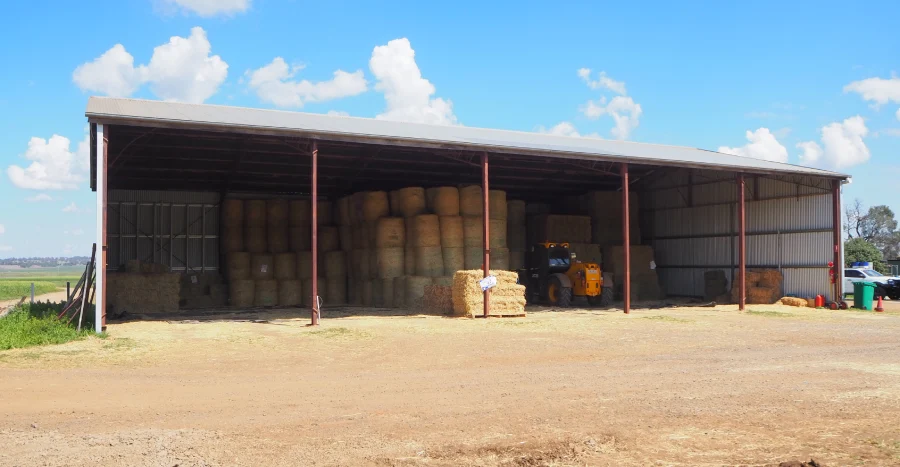
Cutting feed costs without cutting corners on animal health is absolutely possible, but it needs a bit of planning rather than blunt cost-cutting. Feed is one of the biggest expenses on Australian livestock farms, and the current hay and grain prices are putting real pressure on cash flow.
Below is a practical guide you can apply whether you’re running cattle, sheep, goats or mixed livestock.
1. Start with a clear feed budget
Guessing is expensive. A simple feed budget helps you see where the money is going and when you’ll hit a shortfall.
Across Australia, agencies like Dairy Australia and state departments recommend feed budgeting as a first step: calculate your feed demand, compare it to what you have on hand, and identify gaps early.
Basic feed-budget steps:
- List your classes of stock
E.g. lactating cows, weaners, dry cows, ewes in late pregnancy, lambs, store cattle.
- Estimate daily intake (as dry matter)
- Rules of thumb and tables for DM intake by weight and class are on the Feeding Livestock and FutureBeef sites.
- Multiply by number of head and days.
- Measure your supply
- Pasture: use feed-on-offer guides and pasture assessment tools.
- Conserved feed: list hay, silage, grain, by-products by tonnes (as-fed and dry matter).
- Spot gaps early
If the budget shows a deficit in 2–3 months, you can:
- Buy feed earlier (often cheaper than last-minute).
- Reduce numbers or agist.
- Lock up paddocks or sow a fodder crop.
Doing this on paper, in a spreadsheet or with tools like the NSW DPI Drought & Supplementary Feed Calculator makes it easier to test “what if” scenarios and build the cheapest ration that still meets animal needs.
2. Buy on cost per unit of energy, not cost per tonne
A “cheap” load of hay can be the most expensive feed you buy if it is low in energy.
Agriculture Victoria and others stress that decisions should be based on cents per megajoule of metabolisable energy (c/MJ ME), not dollars per tonne.
Example (simplified):
- Hay A: $300/t, 8 MJ ME/kg DM
- Hay B: $350/t, 10 MJ ME/kg DM
When you convert to c/MJ ME, the higher-priced hay may actually be better value, because you need to feed less to hit the same energy target. Agriculture Victoria shows exactly this pattern in its costing feed guides.
Practical tips:
- Always ask for (or invest in) a feed test so you know ME, protein, fibre (NDF) and dry matter.
- Use cost-comparison tables and calculators (Feeding Livestock website, LLS NSW guides) to compare options side by side.
- On marketplaces like LocalAg, look for listings that include feed tests or ask sellers to provide them before you commit.
3. Test feed quality – don’t buy blind
Visually, a lot of hay and grain looks “fine”. In reality, feed tests across Australia show big variation in energy and protein even within the same type of feed.
State agencies and independent labs all say the same thing:
The only way to be sure of the nutritional value of a particular batch of feed is to have it tested for energy, protein, fibre and dry matter.
Why this saves money:
- You avoid over-paying for low-quality hay.
- You can precisely match ration energy and protein to animal requirements instead of adding “insurance” protein or grain.
- You can confidently buy higher-value feed that actually reduces total kilos fed.
Testing is especially important in drought years, when more marginal hay hits the market and prices can double or more.
4. Match feed quality to the right animals
You don’t need top-shelf feed for every animal on the place.
Nutritional requirements vary a lot with species, weight, growth stage, pregnancy and lactation. MLA and other Australian resources show higher energy and protein demands for growing, late-pregnant and lactating stock compared with dry animals.
A simple allocation strategy:
- Highest-quality feed (best ME and protein):
- Young stock
- Late-pregnant and lactating females
- Animals you are finishing for a premium market
- Moderate quality feed + minerals:
- Dry cows or ewes maintaining condition
- Low-quality roughage:
- Use sparingly and usually in a mixed ration, as fibre, not as the sole diet.
By segregating classes of stock and feeding them separately, you avoid “overfeeding” maintenance animals with expensive feed designed for high performers. This is a key low-cost strategy in many drought and efficiency guides.
5. Use tools that balance nutrition and cost
Several Australian tools and apps are designed to build the cheapest ration that still meets your animal’s needs:
- NSW DPI Drought & Supplementary Feed Calculator – build cost-effective rations for sheep and cattle in dry times.
- Feeding Livestock – Beef and Sheep calculators – estimate intake, requirements and compare supplement costs.
- LLS “Balancing nutrition and cost” resources – step-by-step guidance on comparing feeds by dry matter, ME and cost.
Using these, you can:
- Swap grain types or by-products.
- Test different inclusion rates.
- See the effect of wastage and delivery on real costs.
6. Reduce waste: every spilled kilogram costs you twice
When hay is $400–500/t in drought-affected regions, wasted feed is money blown away on the wind.
Common waste points:
- Storage losses – weathering, spoilage and rodent damage. Storing hay in a shed or under proper covers greatly reduces losses and preserves quality.
- Feeding losses – trampling, sorting, wind and rain. Choosing the right feeder design (e.g. controlled-access grain feeders, ring feeders with hay savers) can dramatically cut losses and improve conversion.
- Overfeeding – putting out more than stock can eat in a day, especially in paddocks with little ground cover.
Low-cost actions that help:
- Use feeders or bunks rather than feeding directly on the ground where practical.
- Match feed-out amounts to estimated daily intake – don’t “dump and hope”.
- Check that troughs and feeders are protected from rain and mud.
Often, cutting wastage by 10–20% is cheaper than buying cheaper, lower-quality feed.
7. Make the most of pasture and home-grown fodder
Using your own pasture and fodder effectively is one of the best ways to reduce purchased feed.
Australian resources on grazing management and dual-purpose crops highlight that matching grazing pressure to feed supply can lift productivity and lower bought-in feed bills.
Key ideas:
- Plan grazing so high-value pasture is used by high-value stock at the right time.
- Consider dual-purpose crops (e.g. grazed cereals or canola) where climate and system allow, to provide extra home-grown feed before grain harvest.
- In harsh seasons, containment feeding can protect pastures and reduce walking energy costs, while you focus supplements in a smaller area.
Home-grown feed is not “free” – there is a nutrient and water cost – but good planning often makes it cheaper than fully imported feed.
8. Choose alternative feeds carefully
By-products and alternative feeds (e.g. citrus pulp, almond hulls, screenings, brewers’ grain) can be a good way to cut costs, but only if:
- You know their nutritional value (again, get a feed test).
- They are safe, consistent, and available in the volumes you need.
- You factor in freight and storage.
Use calculators to compare them on a dry matter and ME basis and build rations with help from your nutritionist, vet, or advisory service. Some feeds are cheap per tonne but poor per MJ ME or difficult to balance for protein or minerals.
9. Know your quality and safety standards
Cutting costs must never mean compromising animal health or food safety.
Regulators like the APVMA and industry programs such as FeedSafe emphasise:
- Good manufacturing practice for animal feed.
- Quality assurance schemes.
- Australian Standard AS 5812-2023 for animal feed manufacture.
When buying feed:
- Ask suppliers about their QA program and whether they follow AS 5812 or recognised schemes.
- Avoid mouldy, contaminated or poorly stored feed, the risk of mycotoxins and health problems outweighs any “saving”.
- Keep records of feed sources and batches for traceability.
10. Buy smarter and use marketplaces to your advantage
In a tight market, where and how you buy matters almost as much as what you buy.
Tactics Australian producers are using:
- Shop around beyond your immediate district when freight stacks up, in 2025, hay is moving north–south in unusual directions as regions trade with each other around drought.
- Use digital marketplaces like LocalAg to:
- Compare real prices on hay, grain and by-products.
- Filter by location to control freight.
- Ask sellers for feed tests and QA details before purchase.
- Consider forward contracts or agreements with reliable growers when conditions allow, to lock in supply and reduce price risk.
11. Keep welfare and long-term productivity front and centre
Underfeeding or feeding poor-quality, unbalanced rations may look cheaper in the short term, but it usually costs more through:
- Lower growth rates and lower sale weights.
- Reduced fertility and higher empty rates.
- Higher disease risk and treatment costs.
National guidelines for feedlots and grazing systems make it clear: rations must meet minimum nutritional needs and support animal health and welfare.
When in doubt, get advice from:
- Your vet or nutritionist.
- State department livestock officers or local producer groups.
- Industry organisations (MLA, Dairy Australia, producer networks).
Bringing it together
Cutting feed costs without compromising quality is about doing the basics really well:
- Budget your feed.
- Test and compare on an energy basis.
- Match the right feed to the right animals.
- Cut waste before you cut quality.
- Use tools, standards, and marketplaces to make better decisions.