
There is a lot of noise around El Niño right now, some of it useful, some of it overblown. Probability figures are being thrown around, historical droughts are being cited, and the word “severe” is appearing in a lot of headlines. Before you make decisions based on that noise, it helps to understand what the forecasts actually say, what El Niño reliably does and does not do to Australian agriculture, and which farm decisions genuinely change as a result.
ENSO is currently neutral. The La Niña that ran through 2025 and into early 2026 has ended. What matters for the rest of this year is what comes next.
The tropical Pacific is warming. A large pool of warmer-than-average water has been building beneath the surface and is expected to rise over the coming months. NOAA puts the probability of El Niño emerging between May and July at around 82%. The World Meteorological Organization has stated publicly that there is “high confidence” in El Niño onset, with further intensification expected through the second half of the year. The BOM itself notes that models suggest a moderate to strong event is the most likely outcome.
Importantly, BOM also says this: a strong El Niño signal in the ocean does not necessarily mean strong impacts on Australia’s climate. ENSO is one of several drivers, and it does not act alone.
Learn more about El iño and how it impacts Australia here.
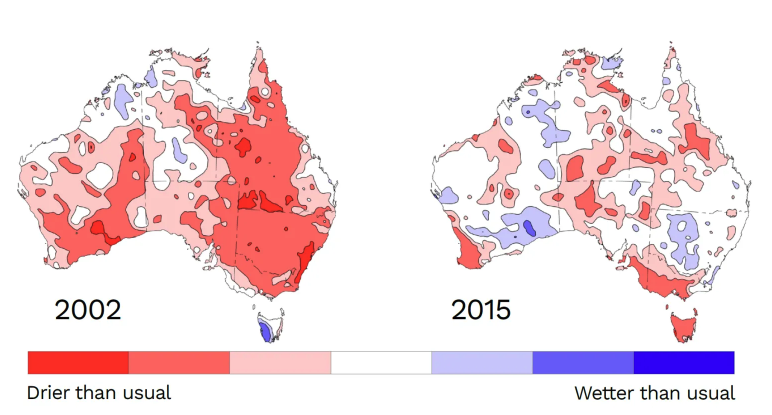
El Niño tends to reduce winter and spring rainfall across eastern and southern Australia. That is the consistent pattern across historical events. Nine of the ten driest winter-spring periods on record in south-east Australia occurred during El Niño years. The five worst Australian droughts on record, in 1982, 1994, 2002, 2006 and the Millennium Drought peak years, all coincided with El Niño.
But the relationship is a tendency, not a guarantee. Some strong El Niño events, including the 1997-98 event, produced only moderately dry conditions in Australia. Others caused significant regional damage while leaving some districts largely unaffected. The 2002-03 event cut national wheat production almost in half, from 24 million tonnes to around 13.5 million. The 2006-07 event slashed wheat production by more than 50% in the worst-affected regions. Those are real numbers and they carry real consequences for farm finances.
Across all El Niño events since 1900, average winter and spring rainfall in the Murray-Darling Basin has been around 28% below the long-term mean. Farm gross domestic product historically falls around 13% in an El Niño year on average. On a severe event, the numbers are considerably worse.
Learn more about the prediction on what might happen with El Niño this season.
Here is the part that does not get enough attention in most farm-level discussions.
The Indian Ocean Dipole, or IOD, is a separate climate system operating to Australia’s west. When it moves into a positive phase, it actively restricts moisture flowing into southern Australia. On its own, a positive IOD is damaging. When it aligns with El Niño simultaneously, the two systems reinforce each other, and the drying effect on southern and eastern Australia intensifies significantly. The 2018-19 drought, which cut Australian farm cash income by 41% nationally, is the most recent example of that combined pattern.
Right now, the IOD is neutral. BOM says a positive IOD is possible during winter and spring 2026, but there is substantial uncertainty. Most models have it staying neutral until at least early winter.
The distinction matters for planning. An El Niño alone, particularly a moderate one, may produce below-average but manageable rainfall across most cropping regions. El Niño combined with a positive IOD is a materially different situation. Watch BOM’s ENSO Wrap-Up updates through June and July for any shift in IOD status. If both systems confirm positive simultaneously, that is the signal to get conservative across every decision on the farm.
The BOM’s June to August outlook already reflects the El Niño signal emerging. There is a 60 to 80% probability of below-average rainfall across most of Victoria, southern SA, inland NSW and south-eastern Queensland, before El Niño is even officially confirmed. The dry signal is already in the season.
For cropping, this reinforces decisions most growers in the south are already making: prioritise establishment over area, use varieties that perform in low-rainfall seasons, calibrate inputs against realistic yield expectations rather than optimistic ones, and get the program in the ground early enough to make the most of whatever moisture arrives.
What El Niño adds to that picture is specifically the spring. Even if winter rainfall delivers something reasonable, El Niño typically tightens conditions in September and October. That is exactly when crops need moisture for grain fill. A crop that establishes well in June but runs out of moisture in September is going to disappoint.
This makes variety maturity important in a way that often gets overlooked. In an El Niño year, faster-finishing varieties that can complete grain fill before September heat arrives are lower risk than slower-maturing types that are still heading into spring looking for moisture. Vixen for late-sown situations and other quick-maturity cereals for compressed windows are worth reconsidering against your normal variety mix if you have not already.
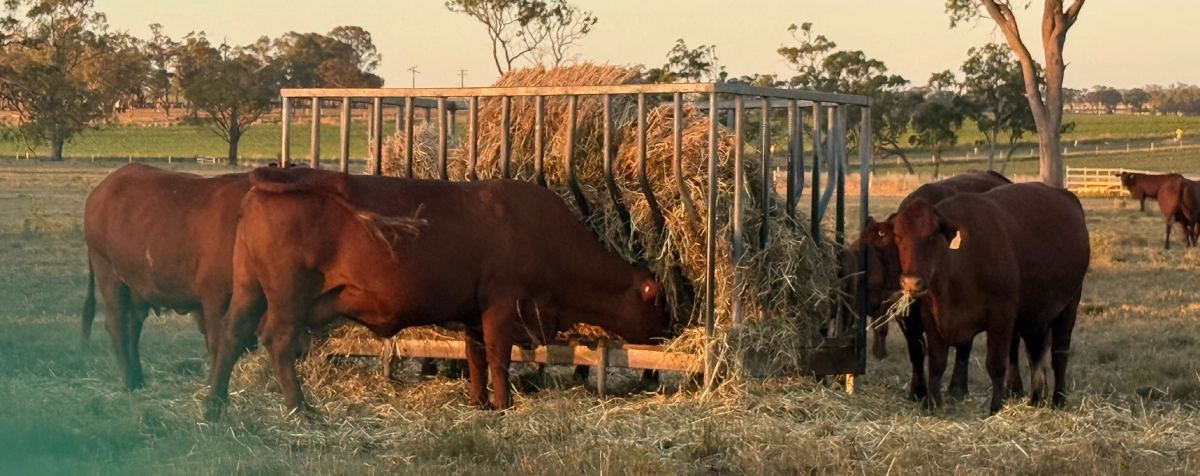
El Niño tends to reduce pasture production across southern and eastern Australia, which means feed gaps arrive earlier and last longer than in a normal year. Hay and fodder that was already expensive in early 2026 because of the dry autumn is likely to stay expensive or get worse if winter rainfall disappoints.
The practical responses are familiar but the timing matters. If you are going to reduce stock numbers, doing it before the season locks in, which in the south means before the end of June at the latest, gives you access to a broader market and better prices than waiting until every other producer in your district is doing the same thing. Forward buying fodder at current prices, before the season confirms dry, is generally cheaper than buying into a shortage.
The Feed Central platform is worth using here for independent hay and silage testing before you commit to bulk purchases. In a season where every dollar of feed cost counts, knowing the actual nutritional value of what you are buying, rather than relying on a label or a seller’s description, is basic risk management.
El Niño does not mean a guaranteed drought. It does not mean you should abandon your cropping program or destock entirely. It does not mean every paddock in every region will fail.
What it means is that the probability distribution for the season has shifted toward the dry end. A wet winter is still possible. Some regions will get adequate rainfall. The 2025 season showed that dry sowing and smart variety selection can deliver strong results even when conditions look grim at the start.
The difference between useful El Niño planning and counterproductive panic is this: focus on the decisions that change under a dry scenario, make those decisions early while you still have options, and do not make irreversible choices based on a forecast that still carries genuine uncertainty.
A few things that become more valuable as the season confirms drier:
Get your crop inputs committed but not over-committed. Fertiliser applied against an optimistic yield target in a season that turns dry is money that does not come back. Soil-test before you top-dress and calibrate against realistic expectations. A paddock with 150mm of growing season rainfall has a very different nitrogen requirement than the same paddock in a 300mm year.
Know your cash flow floor. The 2018-19 drought cut farm cash income by 41% nationally. Not every operation can absorb that. Running a simple scenario against your own numbers, what does a 20% yield reduction look like, what does 40% look like, tells you where your pressure points are before they arrive.
Establish your fodder position before July. If you are running livestock, decide now how many months of feed you need in reserve and either secure it at current prices or adjust stock numbers to fit what the season is likely to produce.
Watch the IOD. Check BOM’s monthly ENSO Wrap-Up through June and July. A confirmed positive IOD alongside El Niño changes the calculus considerably and would warrant moving further toward conservative positions across cropping, livestock and input spend.
The season ahead is uncertain. El Niño makes it more likely to be dry, not certain. The growers who tend to come through El Niño years best are not the ones who bet correctly on the forecast. They are the ones who made good decisions early enough to have options when the season revealed itself.
Sources: Bureau of Meteorology ENSO and IOD monitoring, May 2026; BOM Long-Range Forecast June-August 2026; ARC Centre of Excellence for Climate Extremes, El Niño impact on Australian weather and climate; ABARES farm income data 2018-19.
Search our marketplace