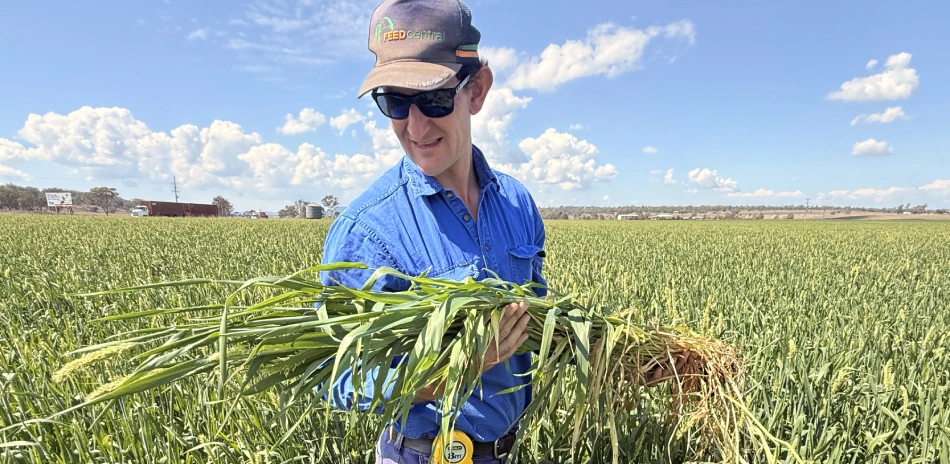
Heading into the 2026 winter season, the outlook for many Australian grain growers, particularly across the Victorian Mallee, SA Eyre Peninsula, and Southern NSW, is defined by one word: dry.
While parts of the north have seen a wet summer, the southern cropping belt is starting with low to very low sub-soil moisture. In a year like this, you aren’t just choosing a variety for top-end yield; you are choosing a variety that can handle a late break, survive a dry start, and finish before the spring heat arrives.
Here is the technical breakdown of what you need to consider for your 2026 program.
Wheat: The “Scepter” Replacements
For years, Scepter has been the safety net for dry years. However, 2026 sees the first real challengers that offer more “bang for buck” in low-moisture scenarios.
- Shotgun (New for 2026): This is the direct evolution of Scepter. It’s agronomically almost identical but offers a significant yield jump. If you know how to grow Scepter, you know how to grow Shotgun. It’s an AH (Australian Hard) variety with slightly better powdery mildew resistance, a plus if we get late-season humidity.
- Vixen: If the autumn break doesn’t arrive until May, Vixen is your “get out of jail” card. Its quick maturity allows it to race through its life cycle and grain-fill before the October heat hits.
- Calibre: Still a top-tier choice for its long coleoptile. In 2026, you may need to “chase” moisture deep in the profile (5–8cm). Calibre’s ability to emerge from depth is a massive advantage over shorter-coleoptile varieties.
Barley: Yield vs. Malt Premium
With low malt premiums forecast for the 2026/27 harvest, many growers are prioritising volume and toughness over chasing a malt grade.
- Cyclops: Currently the benchmark for low-to-medium rainfall zones. It’s a quick-mid maturity variety that has consistently out-yielded Maximus CL by 4–7% in dry-finish trials. It’s now malt-accredited, but its real value is its “shatter” resistance, it holds onto its grain better during windy spring days.
- Neo CL: If you have high weed pressure (Brome or Barley grass), Neo CL is the Clearfield (IMI) choice. It has exceptional early vigor, which helps it compete with weeds even when soil moisture is limited.
- Combat: If you’ve given up on malt and just want sheer feed-grain tonnes in a dry year, Combat is the “tank” of the barley world.
Canola: The High-Risk, High-Reward Play
Canola is the most sensitive crop to a dry start. For 2026, the strategy is about Early Vigor.
- Hybrid vs. Open Pollinated (OP): In a year with low sub-soil moisture, Hybrids (like Nuseed Diamond or 43Y92) generally outperform OP varieties. Their larger seeds and stronger “get up and go” mean they can establish on minimal moisture.
- Chronos TFI: A new 2026 release that combines Triazine (TT) and IMI (Clearfield) tolerances. This is a game-changer for paddocks where you’re worried about herbicide carryover from a dry 2025.
The 2026 Strategy: Dry Sowing Tactics
Waiting for a perfect break in 2026 might mean you don’t start until June, which is too late. Dry sowing will be the dominant strategy this year.
The Coleoptile Factor
If you are sowing into dry topsoil hoping to hit moisture at 7cm, you must check your variety’s coleoptile length. If the coleoptile is only 5cm long and you sow at 7cm, the plant will leaf out underground and die.
Tip: Stick to varieties like Calibre or LRPB Lancer if you are moisture seeking at depth.
Increased Seeding Rates
In dry soil, germination is rarely 100%. Between “malting” (seed rotting in semi-moist soil) and mice predation, you should look to increase your seeding rate by 10%. Aiming for a slightly higher plant density ensures you have enough “survivors” to cover the ground and suppress weeds.
The Inoculant Warning
If you are dry-sowing pulses (Lentils, Chickpeas, Faba Beans) in 2026, do not use peat-based liquid inoculants. The rhizobia will die in dry soil within hours. Use granular inoculants instead; they are much hardier and will sit in the dust until the rain arrives.
The “Dry Summer” Trap: Herbicide Carryover
Because the 2025/26 summer was dry in many regions, the chemical you sprayed last year might still be there. Herbicides like Sulfonylureas (SUs) and Imidazolinones (IMIs) need moisture and soil microbes to break down.
- The Risk: If you had less than 100mm of rain over summer, assume there is carryover.
- The Fix: 1. Switch to an IMI-tolerant variety (CL or IT) to provide a safety net.
2. Avoid sensitive crops like lentils or medic in paddocks with a “hot” chemical history.
3. Conduct a “pot test”: Dig up some soil, plant a few seeds in a pot, and see if they curl up after 10 days.
Nutrition: Avoid “Burning” the Seed
In a dry year, fertiliser is a double-edged sword. Placing high rates of Nitrogen or Phosphorus directly with the seed in dry soil causes osmotic burn. The fertiliser sucks what little moisture is available away from the seed.
- The Rule for 2026: If the soil is dry, keep “seed-placed” fertiliser to a minimum (less than 10kg/ha of N). Use deep banding to put the bulk of your nutrition 3–5cm below the seed. This protects the seedling and encourages roots to grow down toward the sub-soil moisture.
2026 Variety Quick-Check Table
|
Crop
|
Best for Early Sowing
|
Best for Late Break
|
Best for Weed Control
|
|
Wheat
|
Shotgun / Calibre
|
Vixen
|
Tomahawk CL Plus
|
|
Barley
|
Neo CL
|
Cyclops
|
Maximus CL
|
|
Canola
|
43Y92 (Hybrid)
|
Nuseed Diamond
|
Chronos TFI
|
Focus on What You Can Control
You can’t make it rain, but you can control the “Starting XI” in your paddock. For 2026, the winning formula is:
- Select for Vigor: Choose varieties that jump out of the ground.
- Sow Early: Don’t wait for the rain; get the seed in the ground so it’s ready when the clouds arrive.
- Manage Residue: Don’t let last year’s chemical kill this year’s crop.