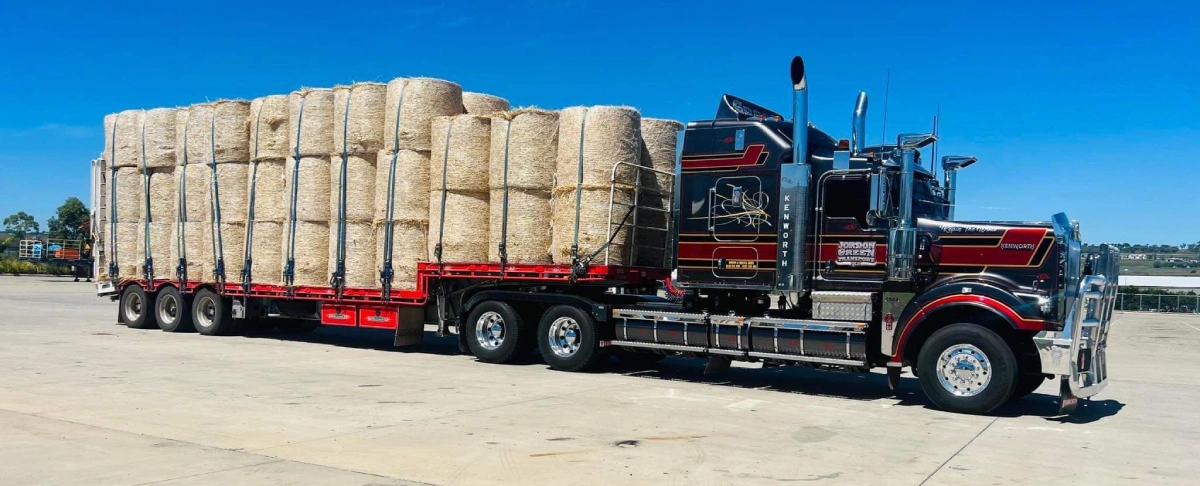
When you’re buying or selling hay, it’s easy to focus on price per tonne and forget about the truck. But with freight often one of the biggest costs in a hay deal, and fuel prices high, bale weight can make or break the economics.
Trucks are paid by the load, not the bale
A truck costs roughly the same to run whether it’s carrying heavy bales or light ones. The difference is how many tonnes of hay that cost is spread across.
Here’s a simple illustration, using example figures:
- A load costs $3,000 to deliver.
- With well-made, heavy bales, the truck carries 24 tonnes, so freight works out at $125 a tonne.
- With light bales, the same truck is full at 20 tonnes, so freight works out at $150 a tonne.
That’s $25 a tonne more for exactly the same trip, just because of bale weight. Over several loads, it adds up quickly.
A win-win-win
As Feed Central’s Tim Ford explained in the latest market report, loading trucks to capacity is a win for everyone:
- The seller has a more competitive delivered price and moves more hay per load.
- The buyer pays less freight per tonne of feed.
- The transport company runs an efficient, full load.
Tips for sellers
- Aim for consistent, dense bales. Buyers and carriers can plan loads more accurately when every bale weighs about the same.
- Know your average bale weight and include it in your listing.
- Consider bale format. Dense large squares generally cart more efficiently than lighter formats.
- Keep quality high. A heavy bale of poor hay is still poor hay, so a feed test helps buyers see the value.
Tips for buyers
- Ask for the average bale weight before you agree to a price per bale.
- Compare delivered prices per tonne, not just ex-farm prices.
- Ask for weighbridge tickets where possible, so you know exactly what you received.
- Understand how freight is calculated, including any fuel levy.
What about the fuel levy?
Many carriers add a fuel levy surcharge that moves with diesel prices, which is why a delivered quote can change between agreement and delivery. LocalAg’s fuel levy surcharge brings transparency to freight costs so you know what you’re paying and why.
Buy and sell smarter on LocalAg
LocalAg listings show bale weights, test results and ex-farm prices, so you can compare hay on a true delivered-cost basis. With the market expected to tighten into 2027 (see our Hay Market Outlook), every tonne on the truck counts.
Browse hay listings or list your hay for free.