
Choosing the best hay for cows can feel confusing, especially when every bale looks a bit different. Some farmers worry their cows are not getting enough nutrients, or maybe they are spending money on hay that their cattle just will not eat.
One key fact stands out. Not all hay is the same. For example, lucerne and grass hay each have very different nutrition levels and are better for certain types of cattle.
This guide will break down which hay suits dairy cows and beef cattle best. It will also show you what to look for in good hay and how to store it right. Find out which choices keep your cows healthy and your wallet happy.
Keep reading to make feeding your cows simple!
Choosing hay for cows is not just picking any type. You need to think about what your cows eat, their growth stage, and the quality of the hay itself.
Cows need the right balance of protein, calcium, fibre, energy, and minerals. A 500kg pregnant cow needs at least 8kg of hay each day. For a herd of 30 cows, that works out to 240kg daily.
Lucerne hay stands out as the best hay for dairy cows because it is high in protein and calcium; these support weight gain and help with strong milk production during lactation. The nutrition in alfalfa can shift depending on breed or harvest time.
Oaten hay offers more energy and taste but gives only moderate nutrition.
Grass hays work well for fibre but sit lower on nutrients compared to legume hays like lucerne. High-performing cattle may need extra feed or supplements if they eat mostly grass hay.
Lick blocks help fill any gaps in salt, mineral or protein intake if other feed is enough. Some farmers mix grain with hay too; total cost per cow can hit $5.08 per day—$1.80 for grain and $3.28 for hay.
Lucerne’s rich protein lifts milk yields in lactating cows, says local farmer Annette Johnson.
Monitoring your herd’s body condition helps you spot problems early—if cows lose weight even after feeding enough good-quality feed, it might be time to look at different options or reduce stock numbers.
Young cattle need more protein and calcium than adult cows. Lucerne hay, also called alfalfa hay, is great for calves and growing animals. It gives them the nutrients they need to build strong bones and gain weight.
Calves do best with tender, leafy hay that is harvested before it blooms. This softer hay is easier for small mouths to chew and digest.
Dairy cows, especially if they are producing milk or are pregnant, also require hay that packs a lot of nutrition. Lucerne hay meets those higher needs, making it ideal for milking or pregnant cows.
Mature beef cattle do not need as much protein. They can do well on mixed grass hay, like orchardgrass or ryegrass, and even Rhodes grass hay. Cows that are raising calves or making milk still need extra protein and energy in their feed, so their hay should be top quality during this stage.
Each age and production stage calls for a different type of hay to keep the herd healthy and performing well.
Bright green hay points to high-quality feed with strong nutrition. Yellow hay tells you it is too mature, while brown means there could be fermentation issues. A fresh, sweet smell is a top sign of safe hay. We recommend getting your hay tested for nutrients using Feed Central’s Feed Testing Service.
If it smells musty or off, it may have mould or spoilage, which can make cows refuse it.
The best hay should feel soft and easy to bend. Coarse, hard stems are less tasty and have fewer nutrients. Flakes should pull apart easily without clumping or dust. Avoid hay with visible mould, weeds, or any dirt.
Weathered hay often looks dull or mouldy on the outside, but can still be green and good inside. Covered or indoor-stored bales keep their value better than ones left open to the weather.
Dairy cows thrive on quality hay. Lucerne hay is packed with nutrients, making it a top choice for milk production. Oaten hay is another great option that offers good fiber and energy for these animals.
Lucerne hay packs a strong punch for cows. It has about twice the crude protein and three times the calcium of grass hay. Young or immature alfalfa plants give the most nutrients, especially in the leaves, which hold more value than the stems.
Early bloom lucerne can reach about 18% crude protein, while late bloom drops to around 15.5%. Second cuttings usually have about 16% protein, but first cuts might be stemmy with a few weeds mixed in.
Farmers choose lucerne hay for its boost to milk yield and weight gain in lactating cows. You may notice a clear difference in herd health if you use quality lucerne hay, but cost often runs higher than other types, such as clover hay.
“Lucerne makes the best feed for top-producing dairy cattle,” many say on Aussie farms.
High calcium helps some animals thrive but poses a risk of urinary stones if not managed well, especially for mature steers or certain breeds. Peak animal health comes from using bales with a moisture content close to 15%.
Keep these facts on hand next time you check your bales—quality lucerne deserves careful handling at every step!
Shifting from lucerne hay, let’s explore oaten hay. Oaten hay is known as premium roughage in the global export fodder market. Many international dairy farmers highly value it for its quality.
Research from the University of Melbourne shows high-quality oaten hay has the best dry matter disappearance and fermentability. This means cows can digest it well and gain nutrients efficiently.
Lactating dairy cows find oaten hay very palatable, which reduces sorting activity. This helps them take in more essential nutrients.
Younger crops are considered better since they offer higher quality nutrition. Harvesting must happen while oats are still green to prevent nitrate poisoning, especially after a drought.
Oaten hay suits horses, cattle, and sheep due to its moderate nutritional content. Future studies will help determine how much should be included in cattle diets for optimal benefits.
Best hay for beef cattle includes mixed grass hay and Rhodes Grass hay. These provide great nutrition while keeping your cows healthy and strong.
Mixed grass hay combines Rhodes grass and ryegrass. This mix is excellent for beef cattle due to its balanced nutrition. Rhodes grass hay is soft and tasty, ideal for picky eaters or cows with breathing issues.
Ryegrass hay provides high energy and moderate protein, assisting with weight gain and milk production.
Both grasses thrive in cooler climates and adapt easily to different soils. Using mixed grass hay supports optimal weight gain and overall health in livestock. Consider the age and health of your cattle when selecting this type of hay, ensuring it is free from mould or other harmful substances.
Fine, leafy cuts are more digestible, making them a better choice for your herd’s needs.
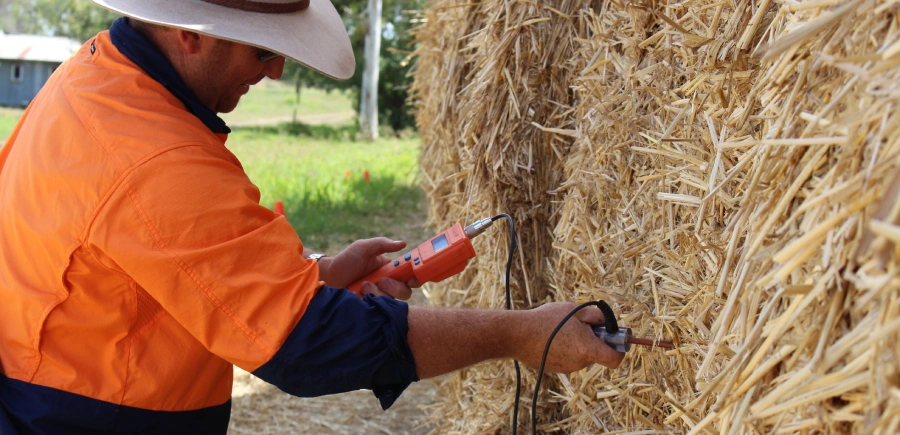
Assessing hay quality is key to your cows’ health. Check the leaf-to-stem ratio; more leaves mean better nutrition. Freshness matters, too—avoid any hay with mould or a bad smell.
A high leaf-to-stem ratio is crucial for good hay. It shows that the hay has more leaves, where most of the protein is found. Ideal hay should have two-thirds of its content as leaves.
This means the hay will provide better nutrition for your cows.
Fine stems are important too. Thicker, coarse stems become fibrous as they mature. This reduces nutritional value and makes the hay less tasty for cows. The higher the proportion of leaves, the better the crude protein and digestible nutrients will be in your feed.
Next, consider the freshness and absence of mold in your hay. Fresh hay has a pleasant smell and bright green colour. If it smells musty or looks dull, steer clear of it. Mould shows that the hay did not cure properly.
This can cut down on its nutritional value significantly.
Mouldy hay leads to health issues for livestock. It also raises costs and reduces production in cows. Always inspect bales before feeding them to your animals. Look for signs of spoilage like dust or foreign materials too.
Good quality hay should separate easily into flakes; if it’s compacted or stuck together, moisture may have damaged it.
Store hay in a dry place. Keep it off the ground, and protect it from rain and pests.
Indoor storage in a closed shed is optimal and keeps hay dry and safe. Store bales in a well-ventilated shed, especially in humid places like northern NSW. This setup helps prevent losses and maintains the hay’s quality.
Stack the bales to allow airflow. Good ventilation is key to keeping out moisture and pests. High-moisture bales, over 20%, need special care for up to 30 days after baling. Watch them closely for heating or signs of combustion. These bales should be kept separate during this time so you can monitor them closely.
Elevate stored hay on pallets to avoid water damage from the ground. Ensure your storage area drains well, too. Keep flame sources away; safety should always come first! Proper indoor storage can extend shelf life while keeping nutritional value high, reducing waste compared to outdoor methods.
Pests like mice can destroy your hay. We recommend keeping the area around your hay well-maintained to help reduce the risk of serious mouse infestations. The following will help:
Choosing the right hay for your cows is key to their health and productivity. Lucerne is great for dairy cows, while mixed grass hay suits beef cattle. Keep an eye on quality indicators like color, smell, and texture.
Always store hay properly to maintain its nutrition. With the right choice, your cattle will thrive!
Search our marketplace