
Before you move hay, machinery, soil, mulch, manure or turf into or out of South East Queensland, check whether your property sits inside a fire ant biosecurity zone and what movement requirements apply. These materials can all carry fire ants, and moving them without meeting the rules risks spreading a pest that is under a national eradication effort. For anyone buying or selling fodder or farm machinery, that check is now part of doing the deal properly.
Fire ant eradication is a national biosecurity priority. The National Fire Ant Eradication Program aims to eradicate the pest from Australia by 2032, and every producer, buyer and transport operator has a role in preventing further spread. A single missed nest, or one load of carrier material moved without checking, can undo a lot of work.
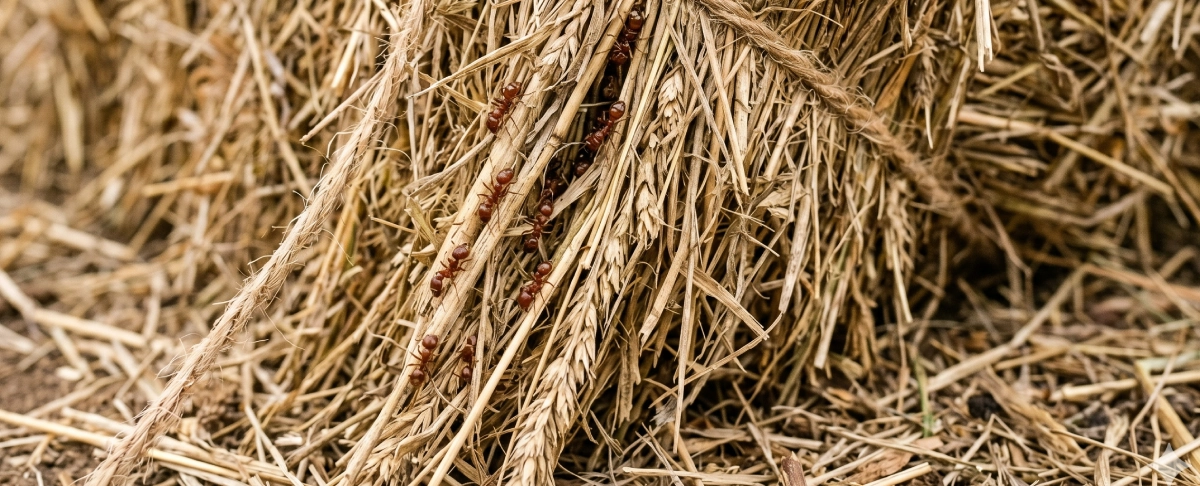
Fire ants do not only spread on their own. They hitch a ride. Hay, soil, mulch, manure, turf, machinery and similar materials are all recognised carriers, which is why they can be subject to movement controls inside fire ant biosecurity zones.
That makes the buying and selling of fodder and machinery a genuine biosecurity touchpoint. A baler, a header, a load of hay or a pallet of turf moving between properties is exactly the kind of movement the controls are designed to manage. Recent wet weather has increased fire ant activity across South East Queensland, and after rain fire ants often rebuild nests on higher ground, which can make them easier to spot if you know to look.
A few steps protect you, the person at the other end of the transaction, and the broader eradication effort.
If you suspect fire ants, do not disturb the nest. Safely take a photo or video and report it. In Queensland call 13 22 68, and in New South Wales call 1800 680 244.
Treatment across South East Queensland is being delivered by helicopters, drones and ground teams, with eradication activity underway across areas including Ipswich, Lockyer Valley, Logan, Scenic Rim and Somerset. Support arrangements for primary producers, including self-treatment assistance, do change over time, so check the current offer on the program website rather than assuming what was available previously still applies.
Hay, soil, mulch, manure, turf and machinery can all carry fire ants and may face movement controls inside biosecurity zones. Always check your property’s zone status and the rules for the specific material before transport, because zone boundaries shift as treatment expands. Inspect loads, keep records, and report suspect ants without disturbing the nest. The national program is working towards eradication by 2032, and careful movement of regulated materials is part of getting there.
This article is general information only. For current zone boundaries, movement requirements and producer support, visit the National Fire Ant Eradication Program at fireants.org.au
Move with confidence
Buying or selling hay and machinery? Know the biosecurity rules before you transport, and find listings at localag.com.au.
Search our marketplace