
Most growers know that herbicide carryover is a risk after a dry year. Fewer take the time to actually test for it before sowing, partly because the damage is invisible until it is already done. By the time you see stunted seedlings or a patchy canola stand in July, the decision has already cost you.
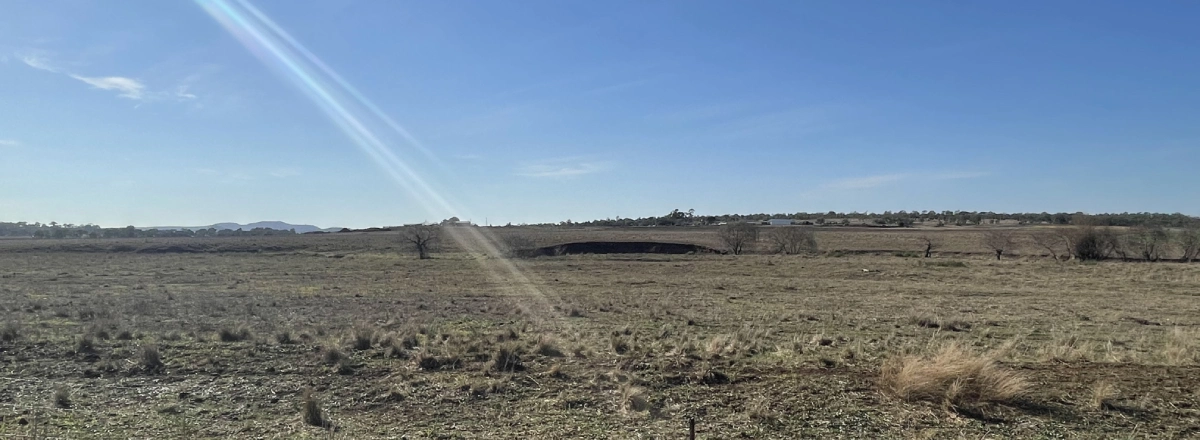
The 2025–26 summer was dry across most of southern and eastern Australia. NSW recorded its second driest April on record. Large parts of Victoria, SA and WA had well below average summer and autumn rainfall. That means herbicides applied during the 2025 cropping season have had less moisture and less microbial activity to break them down than in a normal year. For paddocks where sulfonylureas, imidazolinones or other residual chemistry was used, carryover into 2026 is a genuine risk that deserves a paddock-by-paddock check before you commit seed to ground.
Herbicides break down through two main pathways: microbial degradation and chemical hydrolysis. Both are slowed by dry conditions.
Soil microbes need moisture to survive and function. In a dry summer with low organic carbon soils, microbial populations crash, and the organisms responsible for breaking down chemistry like imidazolinones go largely dormant. Even after rain arrives, it takes time for those populations to rebuild and resume normal degradation activity.
Chemical hydrolysis, the other main breakdown pathway, is also moisture-dependent for many herbicide families. Sulfonylureas, for example, degrade through a combination of microbial and chemical pathways, and the chemical pathway slows considerably in dry, low-moisture conditions.
The practical result: herbicides that should have fully broken down by the end of the 2025 season, based on normal label re-cropping intervals, may still be sitting in the soil at phytotoxic concentrations heading into June 2026.
GRDC research has estimated that 20 to 30% of paddocks across Australia contain soilborne herbicide residues that constrain crop selection in any given season. After a dry year like 2025–26, that proportion is likely higher, and the concentrations more problematic.
Three families warrant the most attention this season.
Sulfonylureas (SUs) are among the most widely used herbicides in Australian broadacre cropping, applied in wheat, barley and canola for broadleaf weed control. Common products include Ally, Glean, Logran and Harmony. They are active at very low concentrations and can affect sensitive crops even when residues are well below what standard soil tests detect. On alkaline soils, sulfonylureas bind less tightly to soil particles and remain more available for plant uptake. Lentils, canola and medic pastures are highly sensitive. Field peas and lupins are less so, but still susceptible.
Imidazolinones (IMIs) are used in Clearfield wheat and canola systems. Products like Intervix and Centurion are commonly applied, and the active ingredient imazamox breaks down primarily through microbial activity. That is exactly the pathway that stalls in dry, low-organic-carbon soils. On acid soils, IMIs persist considerably longer. Canola without Clearfield tolerance and most broadleaf crops including lentils and medics are highly sensitive. The re-cropping interval on standard canola after IMI application is at least 18 months in the best conditions. After a dry season, that interval extends further.
Clopyralid is used in cereal crops for broadleaf weed control and persists in soil longer than many growers expect, particularly in dry conditions. Legumes, including field peas, lentils and chickpeas, are extremely sensitive. If clopyralid was applied in 2025 wheat or barley crops on paddocks where you are planning to sow pulses in 2026, test before you commit.
Other chemistry worth checking in the context of specific rotations includes diflufenican (particularly where canola follows lupins or cereals with high diflufenican rates), fomesafen (on low organic carbon sandy soils where lupins were grown), and pyroxasulfone (relevant for canola establishment).
Canola is sensitive to SU, IMI, diflufenican and pyroxasulfone residues. It is also a crop where a failed establishment is very costly. If any of these chemistries were applied in a 2025 paddock marked for 2026 canola, test first.
Lentils are the most sensitive of the common pulse crops to SU residues, and also highly sensitive to clopyralid. In VIC and SA, where lentils have become the dominant grain legume, this is a particular concern on paddocks that grew cereals in 2025 with sulfonylurea weed control.
Chickpeas are sensitive to SU and clopyralid residues, though somewhat less so than lentils. The key paddocks to watch are those in NSW and QLD where Ally or Harmony products were applied in 2025.
Medic and clover pastures being established this season are highly sensitive to SU residues. If you are renovating pasture on a paddock with a 2025 cereal history and SU chemistry, run a bioassay first.
Wheat and barley are generally the most tolerant options if carryover is suspected. They are not immune, but a paddock with SU or IMI residues that would damage a canola or lentil crop will often still grow a cereal reasonably well. This is relevant to your rotation decisions if testing reveals a problem.
The simplest and most reliable way to check for herbicide carryover is a pot bioassay. It costs almost nothing, can be done on-farm, and gives you a direct answer about whether your planned crop will survive in the actual soil from your paddock.
What you need: a handful of pots or takeaway containers, soil collected from the suspect paddock at two depths (0 to 10cm and 10 to 20cm), untreated soil from a different paddock as a control, and seed of the crop you plan to sow.
How to run it:
For sulfonylurea testing, lentils are the most sensitive indicator species if you want a more sensitive read than your planned crop. Growing lentils alongside your intended crop in the same suspect soil tells you quickly whether SU residues are at damaging levels.
Collect soil from several points across the paddock, especially lower-lying areas where chemistry tends to concentrate, and test each depth separately. Herbicide residues are not uniformly distributed.
Professional soil testing is also available if you want a quantified result rather than a visual one. GRDC has published specific limits of reporting for common herbicide-crop combinations to help interpret results. Ask your agronomist which herbicides to test for based on your spray records and which crops you are considering.
The main options are:
Switch to a tolerant variety. If IMI residues are the concern and you have canola planned, switching to a Clearfield variety provides protection against imidazolinone damage. For SU residues in a paddock planned for canola, there is no tolerant canola option; the safest path is to shift that paddock to a cereal and move your canola to a cleaner paddock.
Change the crop on that paddock. Wheat and barley are significantly more tolerant to most residual herbicide families than canola or pulses. If testing reveals a problem, rotating to a cereal this season and holding the sensitive crop for next year is the lowest-risk response.
Adjust your rotation. If SU residues are widespread across your paddocks, the rotation plan for the full program needs a look. Packing too many sensitive crops into paddocks with residue history is how expensive failures happen.
Do not assume the label re-crop interval is enough. Label intervals are based on normal seasonal conditions. After a year like 2025–26 with well below average rainfall through summer, those intervals underestimate actual persistence. Add at least one growing season of caution to any paddock where rainfall was significantly below average between application and now.
A bioassay is only useful for the paddocks you test. For the rest of your program, your spray records are the starting point. Go through paddock by paddock and pull out any applications of SU, IMI or clopyralid products from the 2025 season. Cross-reference those against your planned 2026 rotations. Any paddock where a sensitive crop follows recent residual chemistry on low-rainfall country is a candidate for a bioassay before sowing.
If your spray records are incomplete or unclear, that is an additional reason to test. The cost of a pot bioassay is a few hours of time. The cost of a failed canola or lentil stand on a paddock you could have identified as at-risk is considerably higher.
Sources: DPIRD WA Residual Herbicides Carryover and Behaviour in Dry Conditions; GRDC Soil and Plant Tissue Testing for Diagnosing Herbicide Carryover Risk (2025 update); Agriculture Victoria Avoiding Crop Damage from Residual Herbicides; Rose et al. 2022, GRDC/Soil CRC herbicide residue research.
Search our marketplace